The Best Way to Cook a Turkey, According to the People Who Tested Them All
Dry-brine it, flatten it and roast it hot. It's juicier, crispier and done in about 80 minutes. Here's the recipe, plus what to do if your bird is still frozen.
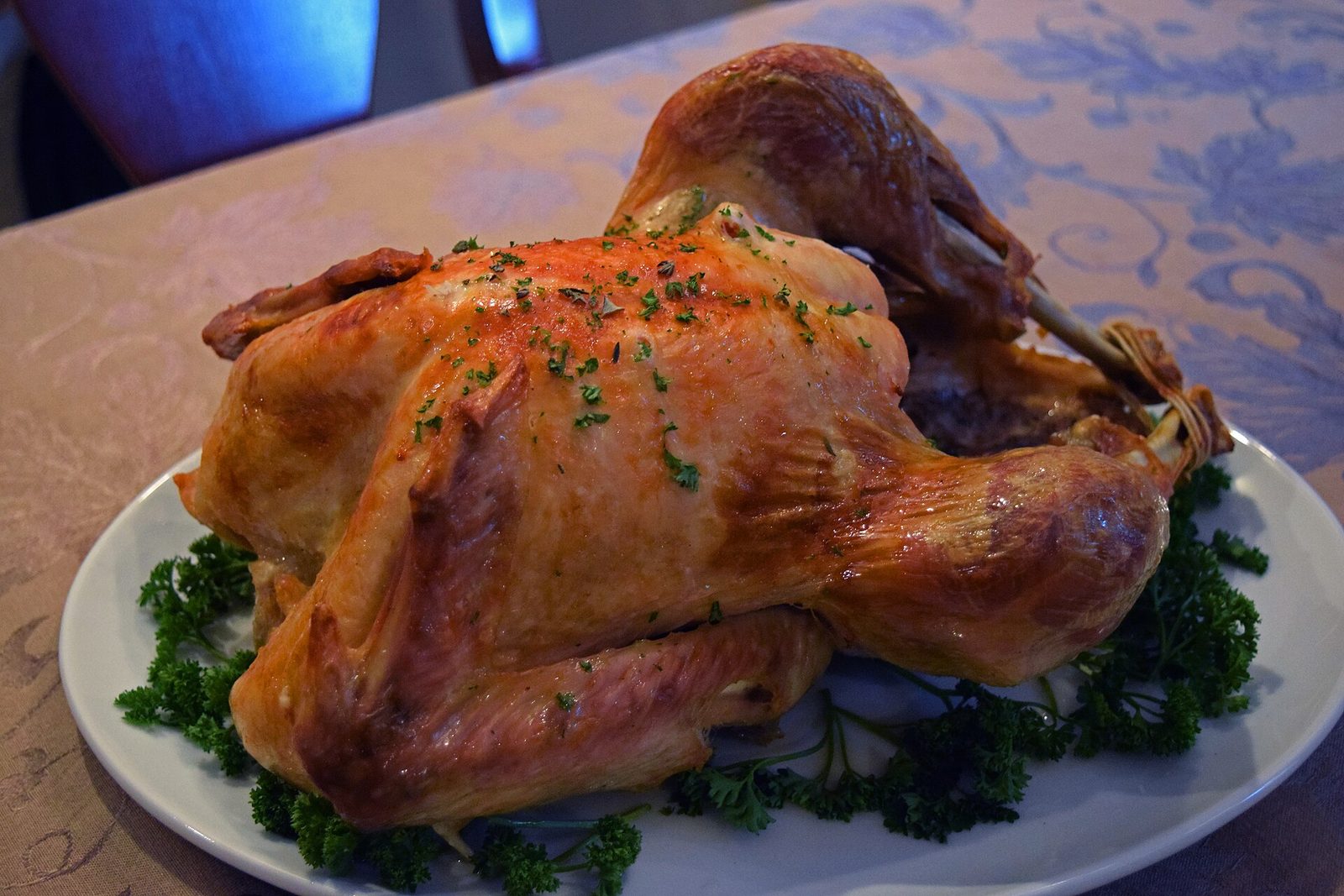

Every food site has a "perfect" turkey, so we looked at who has actually tested them side by side. The answer keeps coming back the same: dry-brine the bird, then spatchcock it.
Allrecipes cooked its five most popular turkey recipes, including deep-fried, smoked and roasted in a bag, and named a spatchcocked, butter-roasted bird the best overall. Food & Wine's test kitchen put a classic wet brine against a dry-brined spatchcocked turkey and picked the dry brine. Reviewed's testers have recommended spatchcocking for years. And when Simply Recipes asked four chefs, all four said the same thing: dry-brine overnight.
Two words to know. Dry brining means rubbing the turkey with salt and letting it sit uncovered in the fridge. The salt seasons the meat all the way through and dries out the skin so it crisps. No bucket of salt water. Spatchcocking means cutting out the backbone and pressing the bird flat. It cooks much faster and more evenly, so the breast doesn't dry out while you wait for the legs.
Want the classic whole bird instead? The most-loved traditional recipe online is Alton Brown's Good Eats Roast Turkey, a wet-brined bird with thousands of five-star reviews on Food Network. It's a great recipe, but it takes a big container and fridge space for the brine.
The recipe below follows J. Kenji López-Alt's famous Serious Eats method. It serves 10 to 12.
Step 1, flatten it. Set the turkey breast side down. Cut along both sides of the backbone with shears and pull it out. Save it, the neck and the giblets for gravy. Flip the bird over and press hard on the breastbone until it lies flat. Or ask your butcher to do it.
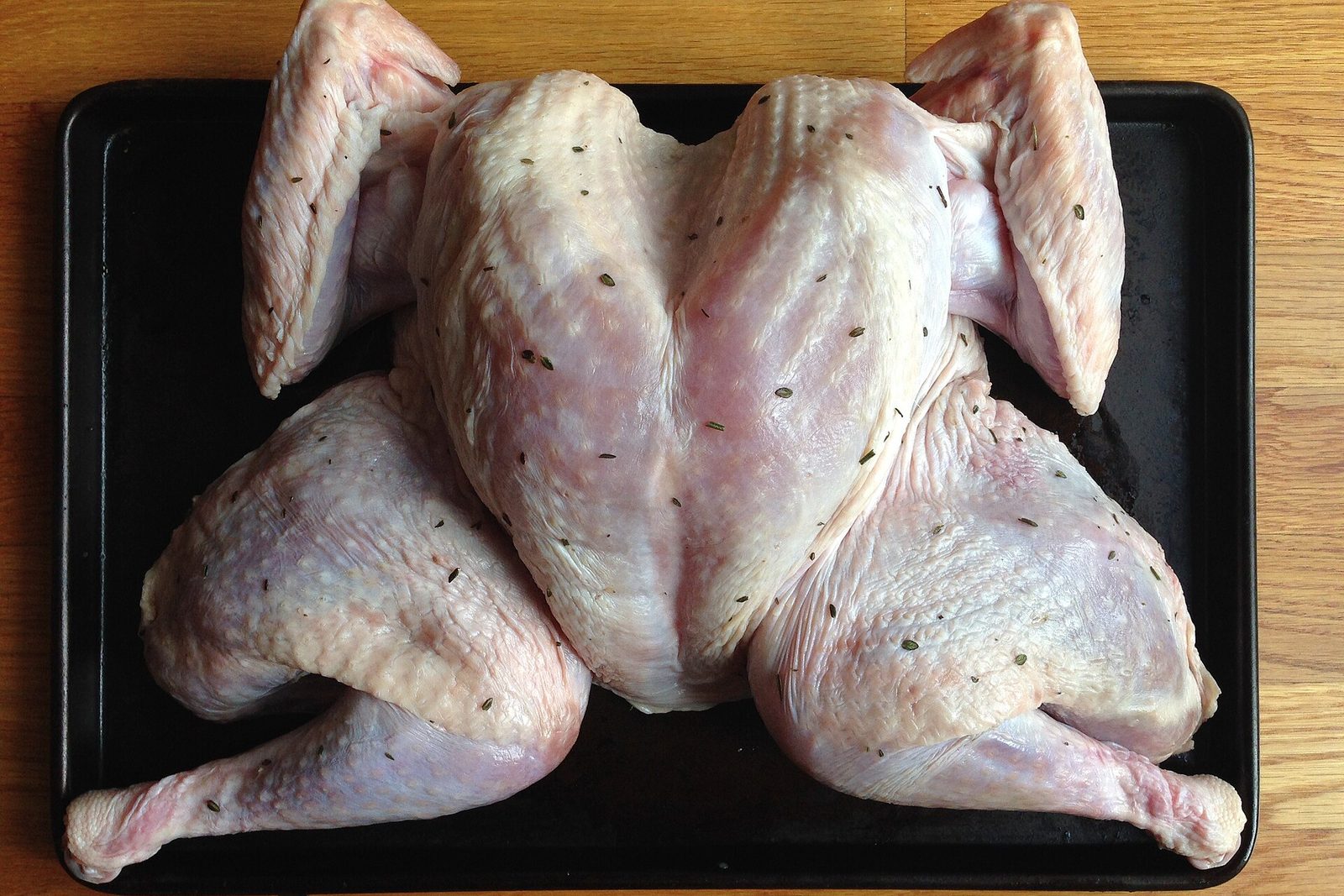

Step 2, dry-brine it, 12 to 24 hours ahead. Mix the salt and baking powder. Pat the turkey dry and sprinkle the mix evenly over every surface from about a foot up. You probably won't need all of it. Set the bird on the rack over the baking sheet and refrigerate it uncovered. Don't rinse it off later.
Step 3, roast it. Heat the oven to 450°F. Spread the chopped vegetables and thyme on the baking sheet and set the rack with the turkey on top. Pat it dry, rub with oil and season with pepper only, since it's already salted. Tuck the wing tips behind the back.
Roast about 80 minutes, turning the pan now and then. Kenji pulls the turkey when the thickest part of the breast reaches 150°F and the thighs reach at least 165°F. Note that the USDA's safe temperature for turkey is 165°F. Use a thermometer, not the clock.
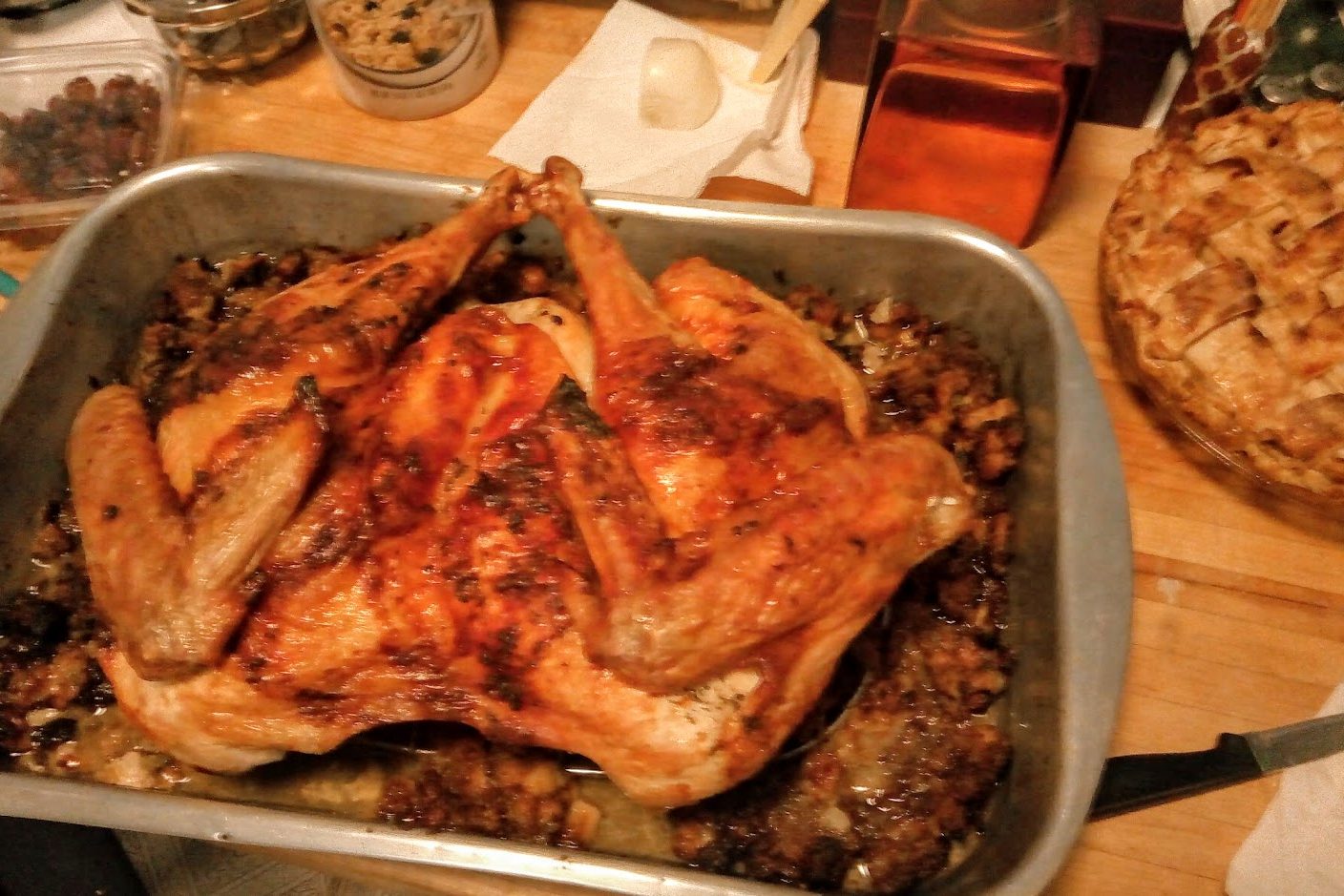

Step 4, rest and carve. Let it rest 20 minutes. Meanwhile, simmer the backbone, neck and giblets with more onion, carrot, celery and broth for about 45 minutes, strain, and thicken it with a butter-and-flour roux for gravy. Whisk in the pan juices at the end.
Is your turkey still frozen? Don't thaw it on the counter or in hot water. The USDA says to allow about 24 hours in the fridge for every 4 to 5 pounds, so a 12- to 16-pound bird needs 3 to 4 days. If that's too slow, submerge it in its wrapper in cold water, change the water every 30 minutes and allow about 30 minutes per pound, then cook it right away. A turkey thawed in cold water should skip the long dry brine, so just salt it before roasting.
Here's the move: if your turkey is thawed, flatten and salt it Wednesday morning, roast it Thursday at 450°F, and you'll have crisp skin and juicy meat on the table in about two hours, with the oven free for everything else.
Sources
- Allrecipes via AOL, I tried our 5 most popular turkey recipes
- Food & Wine via Yahoo, Wet- vs. dry-brined turkey
- Reviewed, What's the best way to cook a turkey?
- Simply Recipes via AOL, I asked 4 chefs how to roast the best turkey
- Food Network, Alton Brown's Good Eats Roast Turkey
- Serious Eats, Crisp-Skinned Butterflied Roast Turkey (J. Kenji López-Alt)
- The Sporkful, Kenji López-Alt's butterflied roast turkey with gravy
- USDA FSIS, Thanksgiving food safety and thawing