Mérida, Chichén Itzá and Valladolid: Five Days in Yucatán, Where the U.S. Advisory Is at Its Lowest Level
A colonial capital with a mansion-lined boulevard, the great Maya city of Chichén Itzá (now MX$676 for foreigners) and a pastel town ringed by cenotes. On Fridays and Saturdays you can walk into a part of Chichén Itzá most visitors never see.

If you want Maya ruins, colonial streets and swimming holes away from the Cancún crowds, Yucatán state is the move.
Before you go. The State Department's May 29 advisory rates Mexico as a whole Level 2, exercise increased caution, with a separate level for each state. Travel Market Report's rundown of that update puts Yucatán at the lowest level, the same as Campeche, while neighboring Quintana Roo (Cancún and the Riviera Maya) is Level 2. The advisory's general rules still apply everywhere: the State Department tells Americans not to travel between cities after dark and to use app cars or regulated taxi stands instead of hailing taxis on the street. Our before-you-go guide has the entry rules.
Days one and two: Mérida. The state capital's center is Plaza Grande, ringed by the Cathedral of San Ildefonso, the Government Palace, the Municipal Palace and Casa de Montejo. The state tourism board says the cathedral was the first built on the American continent and the oldest in Mexico, with much of its stone taken from the temples of T'Hó, the Maya city that stood here. Inside the Government Palace, still a working seat of government, are 27 murals by Yucatecan painter Fernando Castro Pacheco on the state's history. On day two, walk or bike Paseo de Montejo, the boulevard of 19th-century mansions, and stop at Palacio Cantón, home to the Regional Museum of Anthropology.
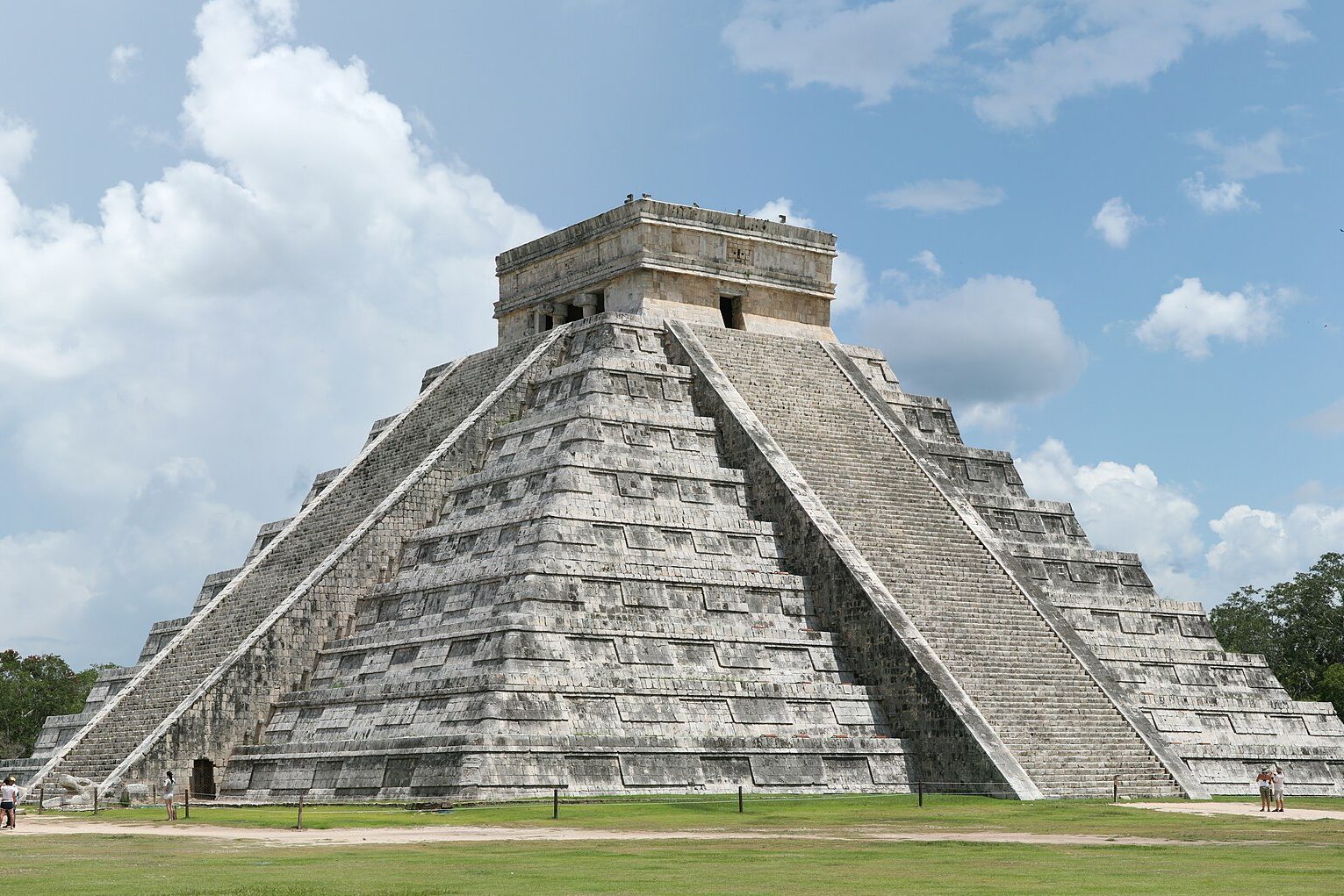
Day three: Chichén Itzá. The Maya city is about 120 km (75 miles) from Mérida. Admission for foreign visitors in 2026 is MX$676, about US$34, made up of INAH's MX$105 federal fee and MX$571 charged by the state, Yucatán newspaper Por Esto reports from INAH's 2026 rates. INAH says entry to the Gran Museo de Chichén Itzá, open daily from 8 a.m. to 5 p.m. with last entry at 4 p.m., is included. There's an extra fee for professional cameras.
If you're there on a Friday or Saturday, ask about Chichén Viejo, the old part of the city opened to small guided groups. INAH says groups of up to 50 go out with its staff and a guide from 9 to 11:30 a.m. and from noon to 2:30 p.m., you reserve at the Chichén Itzá ticket office, and it's included in your admission. The path in is 1.5 km long.
Day four: Valladolid. Chichén Itzá is 53 km from this colorful colonial town, one of Yucatán's two Pueblos Mágicos. Walk Calzada de los Frailes, the cobbled street to the former Convent of San Bernardino de Siena, and stay for the evening projection shows on the convent and the Church of San Servacio. Then swim: the tourism board's picks nearby are open-sky cenotes Zací and Ik Kil and the cave cenotes Suytun and Samulá.
Day five: Ek Balam. Only 28 km from Valladolid, this Maya city is the calm alternative to Chichén Itzá, with well-preserved structures and reliefs.
Getting around. The safest, simplest plan is a rental car or a hired driver in daylight. The government's Tren Maya also runs through the region, and its route descriptions include Izamal, Chichén Itzá and Valladolid; buy only on its official ticket site. If you drive, note that Mexico's finance ministry has named gas stations and toll booths as the first places that will stop taking cash, though no date is set yet. Bring a card that works abroad.
Money: on Nov. 28, US$1 bought about MX$19.6, so MX$100 was about US$5.10.
Sources
- Yucatán Travel (state tourism board), Mérida
- Yucatán Travel (state tourism board), Valladolid
- INAH, Gran Museo de Chichén Itzá
- INAH, Chichén Viejo
- Por Esto, Acceso a zonas arqueológicas de Yucatán sube en 2026 (Jan. 7, 2026)
- Tren Maya
- Travel Market Report, U.S. updated Mexico travel advisory 2026
- U.S. State Department, Mexico travel advisory (Level 2, May 29, 2026)
- ExchangeRate-API, U.S. dollar rates for Nov. 28, 2026